

Sitka Tours & Excursions
Tucked between snow-capped peaks and the protected waters of Sitka Sound, Sitka blends Russian and Tlingit history with some of Southeast Alaska's most accessible wilderness. Embark on a memorable adventure to explore the waters of Sitka Sound by boat and remote-bay kayak.
Everything to know about Sitka
Best Things to Do in Sitka
Sitka sits on the edge of the open Pacific, backed by the snow-capped volcanic peak of Mount Edgecumbe and layered with two distinct histories — Tlingit culture that predates written records and Russian colonial heritage that shaped the town's architecture, food, and street names. It's a smaller, quieter port than Ketchikan or Juneau, but what it lacks in size it makes up for in depth.
Wildlife Sanctuaries Worth the Visit
Two wildlife centers in Sitka stand apart from anything else on the Inside Passage. The Alaska Raptor Center at 1000 Raptor Way rehabilitates over 200 injured birds of prey annually, with a massive indoor flight training center where visitors can stand inches away from bald eagles, owls, and hawks in active recovery. Six miles out of town at 4639 Sawmill Creek Road, the Fortress of the Bear is a non-profit rescue center providing a three-quarter-acre habitat for orphaned brown and black bears.
Tlingit Culture and Russian History
Sitka National Historical Park — Alaska's oldest federally designated cultural park — runs a moss-draped Totem Trail through coastal rainforest past 18 towering Tlingit and Haida totem poles, with active Native master-carvers at work in the visitor center. For architectural landmarks, the green-domed St. Michael's Cathedral sits right on Lincoln Street housing historic Russian Orthodox icons. Nearby, Baranof Castle State Historic Site — Castle Hill — is where Russia officially transferred Alaska to the United States in 1867, offering a 360-degree view of the harbor and mountains at the top.
Science, Salmon, and the Sea
Right on the waterfront at 834 Lincoln Street, the Sitka Sound Science Center houses a working salmon hatchery, touch tanks filled with local marine invertebrates, and massive whale skeleton displays — an easy, engaging stop for anyone curious about the marine ecosystem that surrounds the port.
The Sitka Sea Walk
Starting at Harrigan Centennial Hall, the Sitka Sea Walk follows a scenic paved pathway along Crescent Harbor past the boat docks and the science center, ending at the gates of Sitka National Historical Park. It's a natural connector between several of the port's main stops, and one of the most pleasant stretches of walking in Southeast Alaska.
On the Water With Alaska Travel Adventures
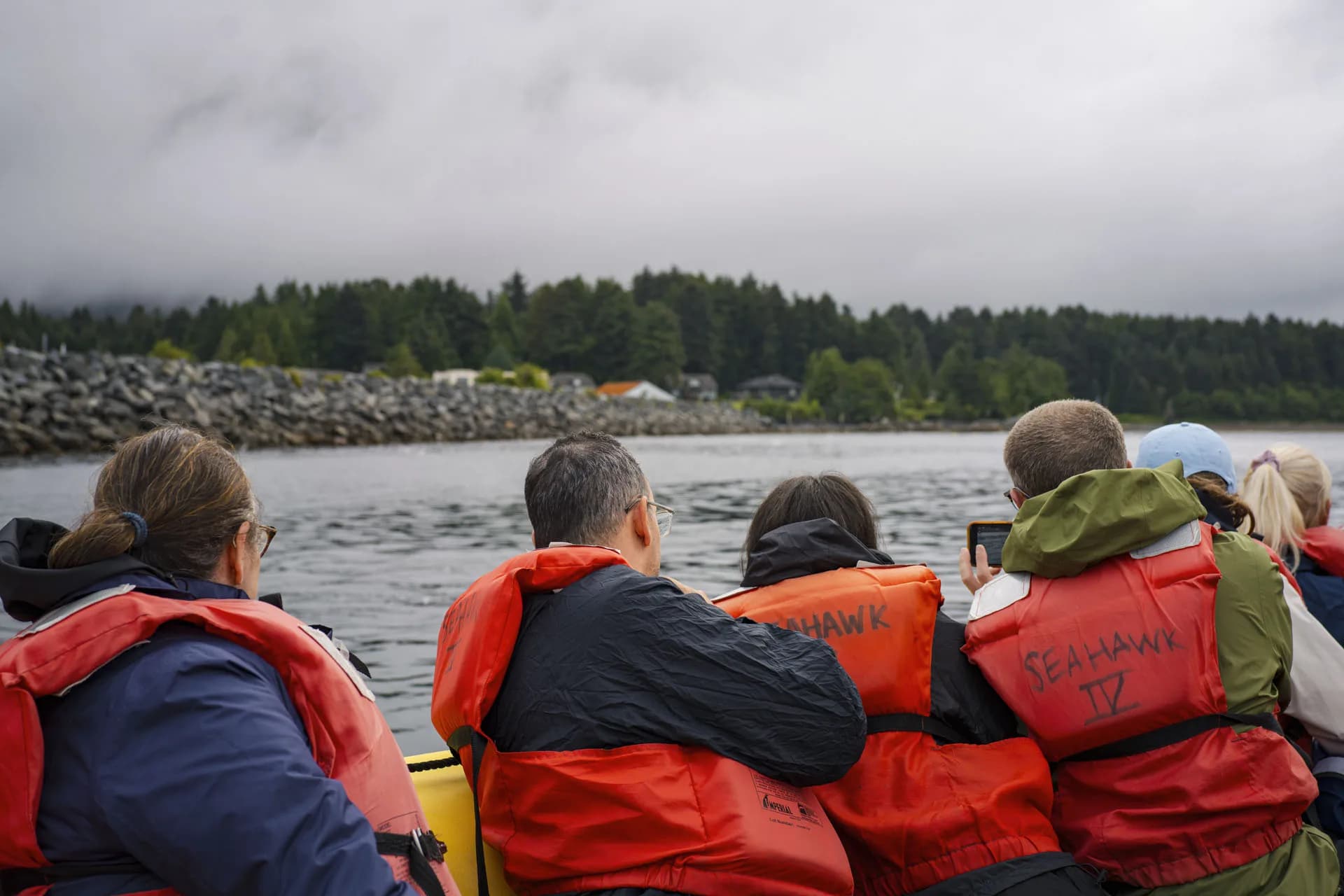
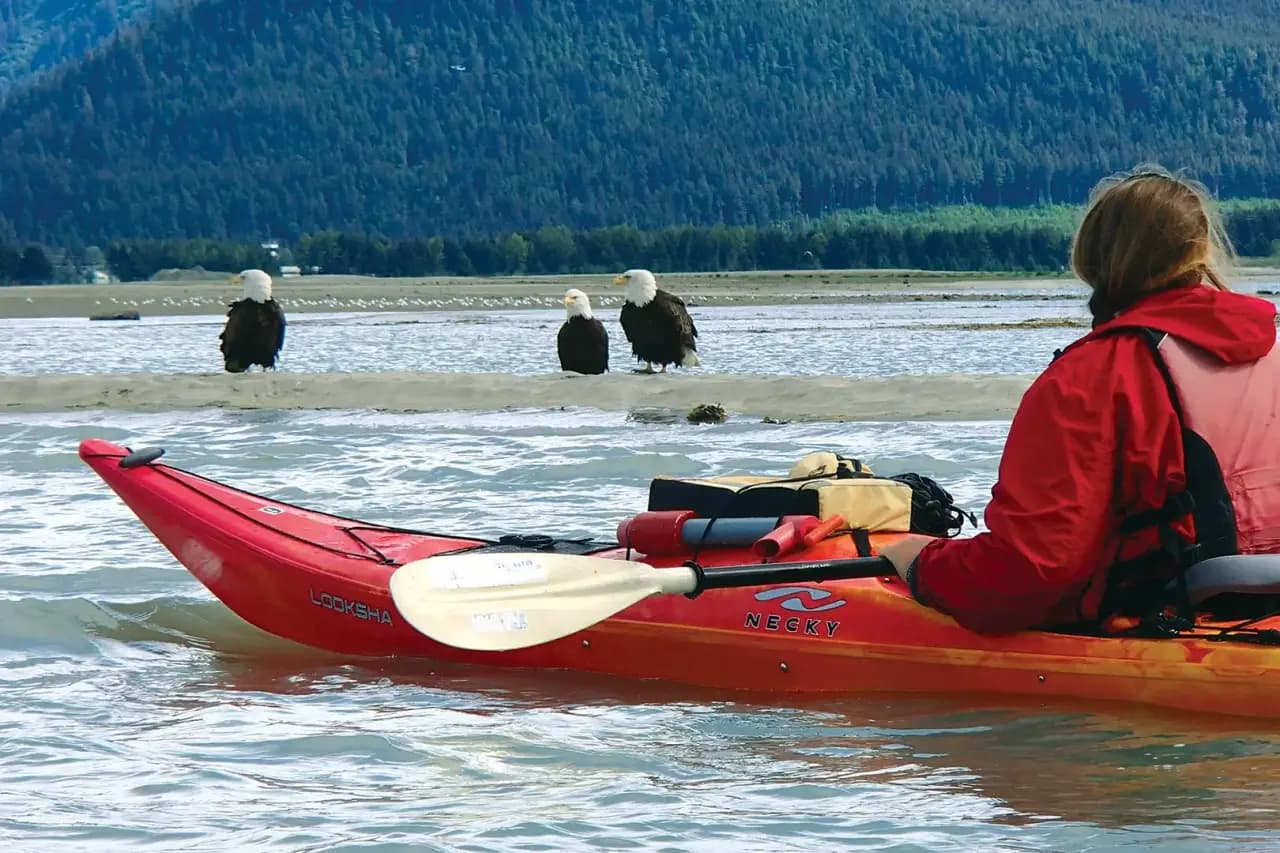
Alaska Travel Adventures' Wilderness Sea Kayaking Adventure is one of the standout tours across all four destinations. The journey starts with a high-speed Seahawk vessel crossing Sitka Sound — Mount Edgecumbe as the backdrop — to a floating base camp in a remote, sheltered bay. From there, guides lead groups of up to six two-person kayaks through Camp Coogan Bay for a 90-minute paddle, with bald eagles, sea otters, bears, and countless bird species along the shoreline. All skill levels are welcome, and the tour includes raingear, boots, a life vest, and an Alaska-style snack back at base camp.
Best Cruise Excursions in Sitka
Sitka faces the open Pacific rather than the protected channels of the Inside Passage — which makes the water around it wilder, more remote, and richer in marine wildlife than most Alaska ports. It's a setting that calls for getting on the water, not just looking at it from the dock.
Alaska Travel Adventures' Wilderness Sea Kayaking Adventure starts with a high-speed crossing of Sitka Sound aboard a Seahawk vessel, Mount Edgecumbe's volcanic peak rising above the water as the harbor disappears behind you. The destination is a floating base camp in a remote, sheltered bay that most visitors to Sitka never reach — far from the cruise terminal, far from the crowds, and surrounded by the kind of coastal wilderness that makes Alaska worth the trip in the first place.
From base camp, the next 90 minutes are spent in two-person kayaks gliding through calm, protected water. Eagles nest overhead. Sea otters float in the kelp beds. Bears appear along the shoreline. Guides are alongside the whole way, sharing knowledge about the marine ecosystem and pointing out wildlife that's easy to miss if you don't know where to look. No prior kayaking experience is needed — full instruction is provided before anyone gets in a kayak, and all gear is included.
It's the kind of excursion that tends to be the one people talk about long after the cruise is over. See the full tour details and reserve your spot.
Best Family Activities
Is Sitka a good destination for families with kids?
Yes. Sitka's best family activities are low-impact, highly accessible, and work well for a wide range of ages — from young children to grandparents. Most are reachable on foot or by the free shuttle from the cruise terminal, and none require advance booking.
What family activities are there in Sitka?
Four attractions cover most of what a family needs for a full port day:
Alaska Raptor Center — a 15-minute walk from downtown, with live bald eagles, hawks, and owls in outdoor aviaries and flight demonstrations throughout the day.
Fortress of the Bear — about 6 miles from town on Sawmill Creek Road, with rescued brown and black bears observable from a covered, elevated boardwalk that's fully wheelchair and stroller accessible.
Sitka Sound Science Center — a compact indoor space on Lincoln Street with a working salmon hatchery, a marine aquarium, and touch tanks where kids can handle starfish and sea urchins.
Sitka National Historical Park Totem Trail — a flat, well-maintained 1-mile loop through coastal rainforest past 18 standing totem poles, manageable for strollers and walkers, with the option to turn back at any point.
Are there family activities that don't require much walking?
Yes. The Fortress of the Bear's viewing area is entirely on a covered wooden boardwalk with ramp access — no uneven terrain. The Sitka Sound Science Center requires almost no walking at all. Both are strong options for families traveling with very young children, strollers, or anyone with limited mobility.
Is there anything for families who want to be more active?
Yes. Baranof Castle State Historic Site — Castle Hill — is a short climb up a paved path to a hilltop where Russia transferred Alaska to the United States in 1867, with 360-degree views of Sitka Sound and the surrounding mountains. It's the most physically demanding stop on this list, with a steep incline and a flight of stairs, but the climb is short and handrails are in place throughout.
Best Wildlife Experiences in Sitka
Sitka's position on the open Pacific puts it in a different league for wildlife than the more sheltered Inside Passage ports. The surrounding waters and old-growth rainforest support one of the most diverse concentrations of marine and land wildlife in Southeast Alaska — and several of the best encounters here happen at dedicated facilities rather than from a boat.
Fortress of the Bear
Six miles from town at 4639 Sawmill Creek Road, the Fortress of the Bear is a non-profit rescue center providing permanent habitat for orphaned Alaskan brown and black bears that cannot return to the wild. Visitors observe from a covered, elevated boardwalk positioned directly above a three-quarter-acre naturalistic habitat — close enough to watch individual bears interact, forage, and swim. Peak activity runs from late July through August, when the salmon runs bring bears to the area in highest numbers.
Alaska Raptor Center
A 15-minute walk from downtown at 1000 Raptor Way, the Alaska Raptor Center rehabilitates over 200 injured birds of prey annually. The indoor flight training center lets visitors stand within feet of bald eagles, owls, and hawks in active recovery. Flight demonstrations run throughout the day, and the outside boardwalk loops are flat and well-maintained.
Whale Park
On Sawmill Creek Road about 6 miles from downtown, Whale Park has a cliffside boardwalk with free fixed binoculars, covered viewing shelters, and a hydrophone system that pipes live underwater sounds into the park. Peak whale activity from the park runs from September through January — outside the main cruise season — but sea otters and bald eagles are reliable sights from the same boardwalk throughout the summer months.
When to Go
Bald eagles, sea otters, and harbor seals are present year-round, but summer brings the most activity overall. Humpback whales are highly active throughout the cruise season from May through September, with peak numbers arriving by mid-summer. Bears are most frequently spotted along shorelines and riverbanks in late July and August, when wild salmon return to local rivers to spawn.
What to Do — Short Excursions
What can I do in Sitka in a few hours?
Sitka is compact and well-connected, so even a short port stop covers a lot of ground. From the free shuttle drop-off at Harrigan Centennial Hall, a 2 to 3 hour self-guided loop combines Sitka National Historical Park's Totem Trail, the Alaska Raptor Center, and a quick climb up Castle Hill for a 360-degree view of the harbor — all walkable, all within a short distance of each other.
What is the best half-day tour in Sitka?
Alaska Travel Adventures' Wilderness Sea Kayaking Adventure runs exactly 3 hours, departing from Crescent Harbor in downtown Sitka. The tour crosses Sitka Sound by high-speed vessel to a remote floating base camp, followed by a guided 90-minute paddle through Camp Coogan Bay with sea otters, eagles, and bears along the shoreline. It's built around cruise ship schedules, with a return-to-ship guarantee included.
How do I get around Sitka if my ship docks at the cruise terminal?
Large cruise ships dock at the Sitka Sound Cruise Terminal, about 7 miles north of downtown, with a free shuttle running the 15 to 20 minutes to Harrigan Centennial Hall. From there, most of Sitka's main stops are reachable on foot. The Alaska Raptor Center is a short walk, and taxis cover the Fortress of the Bear and other spots further out.
Rainy Day Activities in Sitka
What are the best rainy day activities in Sitka?
Sitka's downtown is compact enough that visitors can move between indoor attractions without spending much time in the rain. Most of the best options sit along or just off Lincoln Street, within easy walking distance of the shuttle drop-off at Harrigan Centennial Hall.
Alaska Raptor Center — a large, fully enclosed indoor flight rehabilitation center where bald eagles, owls, and hawks train out of the rain. One of the few places in Southeast Alaska where the weather genuinely doesn't change the quality of the visit.
Sitka Sound Science Center — on Lincoln Street, with a marine aquarium and hands-on touch tanks filled with local intertidal creatures.
Sheldon Jackson Museum — at 104 College Drive, the first concrete building ever constructed in Alaska, housing an exceptional collection of Alaska Native artifacts gathered from across the state.
St. Michael's Cathedral — a green-domed Russian Orthodox church on Lincoln Street, with historic icons salvaged from a fire in 1966.
Russian Bishop's House — one of the last surviving examples of Russian colonial architecture in North America, managed by the National Park Service and restored to its 1850s appearance.
Can I visit the Fortress of the Bear if it rains?
Yes. The Fortress of the Bear's viewing area is a large, covered boardwalk positioned directly above the bear habitats — visitors stay dry while watching the bears, and the animals remain active in wet weather.
Do shore excursions in Sitka get canceled when it rains?
No. Southeast Alaska is a temperate rainforest, and local operators plan for it. Alaska Travel Adventures' Wilderness Sea Kayaking Adventure runs in most weather conditions, with full raingear, boots, and a life vest provided before departure and hot cider waiting at the covered base camp afterward.
What should I wear on a rainy day in Sitka?
Layers in synthetic or wool fabrics work best — moisture-wicking base layer, fleece or lightweight down for insulation, and a fully waterproof outer shell with a hood. Avoid denim or cotton, which trap moisture and lose warmth when wet. Waterproof footwear matters as much as the jacket.
Self-Guided Itinerary in Sitka
Downtown Sitka is one of the most rewarding ports to explore on foot — compact, flat, and layered with Tlingit culture and Russian colonial history around every corner. The free shuttle from the cruise terminal drops passengers at Harrigan Centennial Hall, which is both the natural starting point and the anchor for everything within walking distance.
Here are some suggestions for walking through Sitka:
Start at Harrigan Centennial Hall and Pick Up a Map
The Sitka History Museum is right inside Harrigan Centennial Hall at 330 Harbor Drive — a good first stop for a quick orientation to the town's history before heading out. Free trail maps of downtown Sitka are available here as well.
Walk the Sea Walk to Sitka National Historical Park
The Sitka Sea Walk begins at the ocean-facing doors of Harrigan Centennial Hall and follows a wide, fully accessible waterfront path along Crescent Harbor — with unobstructed views of Sitka Sound and the volcanic cone of Mount Edgecumbe on one side, and historic landmarks on the other. Along the way, the path wraps directly around the Sitka Sound Science Center, a natural stopping point for its salmon hatchery, aquarium, and touch tanks. The Sea Walk ends at the entrance of Sitka National Historical Park, where the flat 1-mile Totem Trail loops through coastal rainforest past 18 standing Tlingit and Haida totem poles, with active Native carvers at work in the visitor center.
Detour to Castle Hill
On the way back from the park, Castle Hill — Baranof Castle State Historic Site — is a short climb up a paved path from the center of town. It's the site where Russia officially transferred Alaska to the United States in 1867, with 360-degree views of Sitka Sound and the surrounding mountains at the top.
St. Michael's Cathedral and the Russian Bishop's House
Back downtown on Lincoln Street, St. Michael's Cathedral is a green-domed Russian Orthodox church housing historic icons salvaged from a fire in 1966. A short walk away, the Russian Bishop's House — managed by the National Park Service — is one of the last surviving examples of Russian colonial architecture in North America, restored to its 1850s appearance.
Sheldon Jackson Museum
At 104 College Drive, midway between downtown and Sitka National Historical Park, the Sheldon Jackson Museum sits in the first concrete building ever constructed in Alaska. Inside, an exceptional collection of Alaska Native artifacts — kayaks, tools, carvings, and ceremonial objects gathered from across the state — fills every display case.
Best Restaurants in Sitka
Sitka's restaurant scene is small but surprisingly strong — fresh halibut, king salmon, and Dungeness crab pulled from the surrounding Pacific waters show up on menus across town, and most of the best options are within a 2 to 8 minute walk of the downtown shuttle drop-off at Harrigan Centennial Hall.
Seafood in Sitka
Beak Restaurant at 2 Lincoln Street is one of Sitka's most consistently well-reviewed spots — a locally owned seafood restaurant that works directly with Sitka fishermen for daily fresh catches. It runs a gratuity-free model: service is included in the menu, no tipping expected or accepted. Halibut Point Crab & Chowder, also right off the dock, is a family-owned spot with a live crab tank and a chowder recipe that's been in the family for generations — halibut and chips, Dungeness crab, and corn fritters are the standouts.
Restaurants Near the Port in Sitka
Mean Queen at 205 Harbor Drive, a 2-minute walk from Centennial Hall, sits upstairs over the waterfront with panoramic views of Crescent Harbor and the surrounding peaks — wood-fired pizza, local oysters, and cocktails in a lively atmosphere. Sitka's Burger & Crab Shack at 327 Seward Street is a casual, well-loved local spot where fresh-ground burgers and Alaskan king crab legs draw a mix of locals and visitors.
Best Local Restaurants in Sitka
Ludvig's Bistro on Katlian Street serves Mediterranean-influenced dishes built around whatever's freshest — king salmon, halibut, and foraged wild mushrooms on a menu that changes with the catch. Only about 30 seats, so reservations are strongly recommended. Cold Water Bar & Grill offers locally caught seafood, full-service dining, and a view of Sitka Sound — a reliable sit-down option close to the water.
Coffee and a Quick Bite
Highliner Coffee roasts its own beans and serves solid breakfast sandwiches and baked goods — a local staple within easy walking distance downtown. For something more off the beaten path, Backdoor Cafe tucked behind Old Harbor Books at 104 Barracks Street is Sitka's best-kept coffee secret, with local pastries and none of the waterfront markup.
Insider Tips
Where do cruise ships dock in Sitka?
Most major cruise lines dock at the Sitka Sound Cruise Terminal at Halibut Point Marine, about 7 miles north of downtown. A smaller number of ships anchor in the harbor and use water tenders to drop passengers off directly at Crescent Harbor in the center of town. It's worth checking your ship's itinerary in advance to confirm whether you'll be docking or tendering — it makes a difference for timing excursions.
How do I get from the cruise port to downtown Sitka?
A complimentary shuttle runs continuously from the Sitka Sound Cruise Terminal to Harrigan Centennial Hall in the center of town — no pre-booking needed, buses line up right outside the ship's exit. The ride takes about 15 to 20 minutes each way. If your ship tenders, smaller boats drop passengers directly at Crescent Harbor, which is already downtown.
Is there public transportation available in Sitka?
The city runs a public bus system called RIDE Sitka, which covers routes between downtown, the raptor center, and coastal roads. For tight schedules, the free port shuttle and walking are the most dependable options.
Do I need cash in Sitka?
Credit and debit cards are widely accepted at restaurants, shops, and major attractions throughout town. A few small bills are useful if you plan to buy local art from street vendors or want to tip guides — though note that Beak Restaurant operates tip-free, with service included in the menu.
What should I pack for a day in Sitka?
A fully waterproof jacket with a hood is the one thing not to leave behind — quick rain showers are a constant in this temperate rainforest setting. Lightweight synthetic or wool layers underneath handle the temperature shifts that happen within a single day, and sturdy walking shoes with good traction cover both the downtown boardwalks and the gravel rainforest trails.
What Guests Say About Sitka Tours
Book Your Sitka Port Day
Make the most of every hour in port. Reserve your shore excursion today, and we'll handle the rest, including expert local guides, gear, and a return-to-ship guarantee so you're back at the dock with time to spare.
Ports of Call Excursions
If you are cruising to Alaska, you can purchase many of our day tours through your cruise line. Select your cruise line below and look for our shore excursions in the appropriate port.